
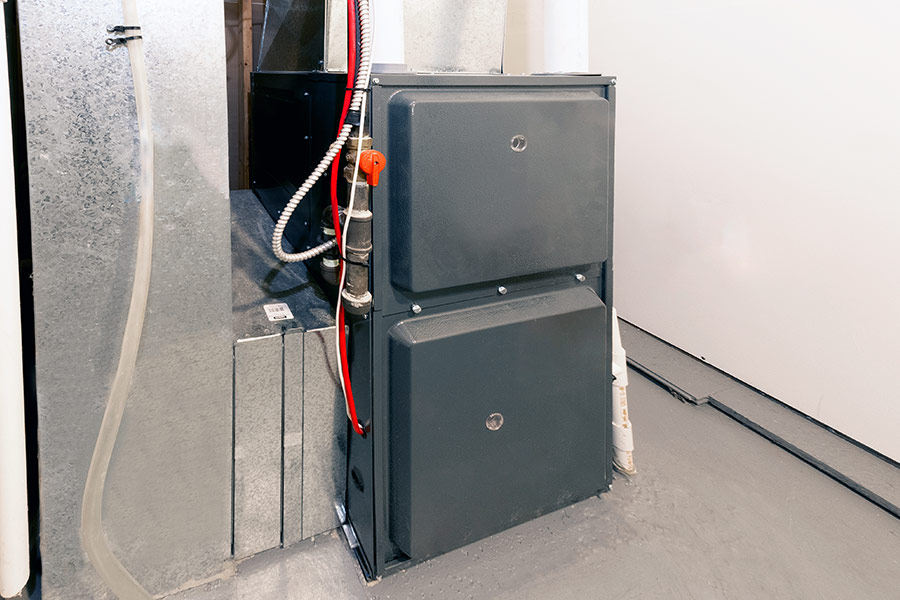
General household products might be simple to replace, but you can’t just go to the store and purchase any old furnace. Sizing furnaces for houses takes some know-how.
At Parker Heating & Air, we’ve gained that experience through our heating services in Beverly Hills, CO. We share some of that knowledge below.
The Basics: Sizing a Furnace for Your House in Beverly Hills, Colorado
What’s the first thing you need to know about choosing the right furnace size for your Beverly Hills home? Let’s start with the basics of sizing furnaces for houses:
- Every installation begins with a BTU calculation. British Thermal Units indicate how much power you’ll need to warm your home’s square footage.
- An HVAC technician adds your climate zone into the equation. Beverly Hills, Colorado, has three possible climate zones, depending on your proximity to the mountains.
- Consider how efficient you’d like your new furnace to be. Heating efficiency ratings are extremely important. How much electricity or fuel does your furnace need to operate?
- Polish off installation services by adding inspection and maintenance benefits. A system’s longevity depends on consistent furnace maintenance. Memberships could supply value-adds, tune-ups, and a lot more savings.
An HVAC company worth its salt correctly sizes every furnace to the space it will heat, but what happens when they get this measurement wrong? Let’s take a look.
How Does an Undersized Furnace Perform?
Let’s say a subpar contractor chooses a furnace that’s too small for the space you want to heat. What could go wrong in the years afterward?
- Low-quality comfort. Despite being brand-new, the undersized furnace won’t heat your whole house well. You’ll discover cold spots.
- System will run constantly. Your thermostat will continuously signal for the furnace to cycle. The stopping and starting never seem to end!
- Unpleasantly surprised by expensive heating bills. Ceaseless cycling swiftly drains a bank account. The heater can’t reach your temperature settings, no matter how long it runs or how much energy it consumes.
- Scheduling repairs sooner than planned. Sizing furnaces for houses prevents long cycling, which inevitably leads to distressed components. You’ll pay for replacement parts within a few years of installing the small system.
Unfortunately, it isn’t only undersizing that’s a problem for furnace installations.
What About an Oversized Heating System?
While it may seem ludicrous, heating systems that are too large are just as problematic as undersized ones. You would think big units would warm small spaces superbly, but it doesn’t work out that way.
With oversized furnaces, you may notice the following issues:
- Your home feels much too warm. It doesn’t take long for the furnace to reach temperatures, but you’ll shed layers.
- The furnace operates in short bursts. The thermostat readings constantly flip between warm enough and too cool, triggering your furnace to short cycle.
- Short cycling takes a toll on your energy bill. This endless starting and stopping draws more energy than you might expect.
- Cycling impacts the system’s performance. Like long cycling, short cyclical bursts will also damage your system faster. Furnace replacements will arrive sooner.
Sizing furnaces for houses is crucial. No amount of maintenance or repairs can mitigate the problems caused by a poorly sized furnace, big or small.
Your Furnace Should Fit Just Right!
When a furnace fits the building perfectly, it cycles for ten to 20 minutes at a time. It takes a while for the temperature to drop below your thermostat setting, so you’ll always have consistent and predictable comfort. You can even enhance the new, flawlessly sized furnace system’s performance by:
- Bumping up those insulation levels: Insulation is integral to preventing heat loss. Install new attic and crawlspace insulation every 15 years.
- Ensuring adequate ductwork size: Do the ducts reach every room? If not, you’ll have cold spots, even with a powerful, properly fitted furnace.
- Covering drafty areas: If you feel a breeze near windows or doors, use a caulk dispenser to block up any openings. You can also place old towels or weather stripping along the bottom of doors and windows to retain more indoor heat.
- Taking advantage of room-to-room heating: Set your ceiling fans to turn clockwise in the winter for a warm, downward draft. Plug in a space heater and close the door if you are staying in one room.
Ask Parker Heating & Air About Furnace Installation in Beverly Hills, Colorado
Sizing furnaces for houses is easy with professional service providers like Parker Heating & Air. Call us, and let’s talk about reducing heating costs with a new furnace in Beverly Hills, Colorado!