
Key Points
- Your thermostat is the brain of your HVAC system — it monitors room temperature, compares it to your setpoint, and signals your heating or cooling equipment to turn on or off.
- Traditional mechanical thermostats use a bimetallic strip that physically bends with temperature changes to open or close an electrical circuit. Modern digital thermostats use electronic sensors and microprocessors for greater accuracy.
- According to the U.S. Department of Energy, upgrading to a programmable or smart thermostat can save homeowners up to $180 per year on heating and cooling costs.
- In Sullivan, CO’s unpredictable climate — where temperatures can swing dramatically in a single day — a properly positioned and calibrated thermostat is essential for consistent home comfort.
- Thermostat placement matters — install away from drafts, direct sunlight, heat-generating appliances, and air vents to ensure the sensor gets an accurate reading.
- Common signs of a faulty thermostat include short cycling, temperature swings, the system not turning on, and higher-than-expected energy bills.
- Parker Heating and Air provides expert thermostat installation, repair, and HVAC services in Sullivan, CO — contact us to upgrade or troubleshoot your thermostat today.
Keeping your home perfectly comfortable in every season isn’t magic. Home heating and cooling is a carefully calibrated system with many moving parts, but at the center of it all is the small device hanging on the wall: the thermostat.
While most of your conversations about the thermostat might focus on deciding what constitutes the “perfect” temperature, have you ever wondered, “How does a thermostat work?” Understanding your thermostat can help you save on energy bills, spot issues that require heating or AC services in Sullivan, CO, early, and get the most out of your heating and cooling system.
What Is a Thermostat?
You already know that a thermostat is the device you use to control the heat or air conditioning in your home — but you might not realize it’s essentially the brain of your HVAC system.
It tells your heating and cooling equipment when to turn on and off to maintain the setpoint temperature (the temperature you’ve set). Its purpose is to maintain a stable indoor temperature automatically — without requiring you to constantly adjust the controls.
Think of it like a cruise control system in a car: rather than constantly pressing the gas and brake, cruise control monitors your speed and adjusts automatically to maintain it. A thermostat does the same for your home’s temperature.
You already know that a thermostat is the gadget you use to control the heat or air conditioning in your home, but you might not realize that it’s essentially the brain of your HVAC system. It tells your heating and cooling system when to turn on and off to maintain the setpoint temperature, which is the temperature you have set. Its purpose is to help you maintain a stable indoor temperature without constantly fiddling with the controls.
How Does a Thermostat Work?
At the heart of any thermostat is the temperature sensor. This component continuously measures the current room temperature in your Sullivan home. When the room temperature drifts away from the setpoint, the thermostat activates your air conditioner or furnace and keeps it running until the sensor reads the desired temperature again.
Mechanical thermostats contain a bimetallic strip — a small piece made from two different metals bonded together that expand and contract at different rates when heated or cooled. As the temperature changes, the strip bends. This bending opens or closes an electrical circuit, which signals your furnace or air conditioner to turn on or off.
Modern digital thermostats perform the same function but use electronic sensors and microprocessors for greater accuracy, faster response times, and the ability to store programmable schedules. In either case, the fundamental principle remains the same: monitor the temperature, compare it to the setpoint, and react accordingly.
At the heart of any thermostat is the temperature sensor. This component measures the current temperature in your Sullivan home. When the room temperature drifts away from the setpoint temperature, the thermostat kicks into action, triggering the air conditioner or the furnace to turn on and run until the sensor reads the desired temperature again.
Traditional mechanical thermostats contain a bimetallic strip, a small piece made from two different types of metal that expand and contract at different rates. As the temperature changes, the strip bends. This bending opens or closes an electrical circuit, which signals your furnace or air conditioner to turn on or off.
Modern digital thermostats perform the same function but use electronic sensors and microprocessors for enhanced accuracy. In either case, the basic principle of the thermostat remains the same: it monitors the temperature, compares it to the setpoint, and reacts accordingly.
The Key Components of Your Sullivan Home’s Thermostat
Despite the wide variety of thermostat models on the market — from basic mechanical dials to full smart home integrations — the core components are consistent across all types:
- Temperature sensor — continuously measures air temperature around the thermostat and compares it to your setpoint
- Setpoint control — the dial, touchscreen, or app interface where you set your desired indoor temperature
- Bimetallic strip (mechanical thermostats) — reacts to temperature changes and physically triggers the heating or cooling system
- Electronic sensor and microprocessor (digital thermostats) — replaces the bimetallic strip with greater precision and programmability
- Electrical circuit — controls the flow of electricity to your HVAC system based on the thermostat’s readings
- Relay or switch — carries out commands between the thermostat and the heating and cooling equipment
Understanding these components makes it easier to identify when something has gone wrong. For example, if the relay or electrical circuit fails, the system may not turn on at all — even when the thermostat is set correctly.
Types of Thermostats: Which Is Right for Your Sullivan Home?
Not all thermostats are created equal. Here’s how the main types compare — and what makes sense for Sullivan, CO’s variable climate:
Manual (Mechanical) Thermostats The simplest type — a dial or slider that you set manually. No programming, no digital display. Reliable and inexpensive, but requires manual adjustment every time your comfort preferences change.
Programmable Thermostats Allow you to pre-set different temperatures for different times of day or days of the week — for example, lower heat at night and while you’re at work, higher comfort settings when you’re home. According to the U.S. Department of Energy, properly using a programmable thermostat can save homeowners up to $180 per year on heating and cooling costs.
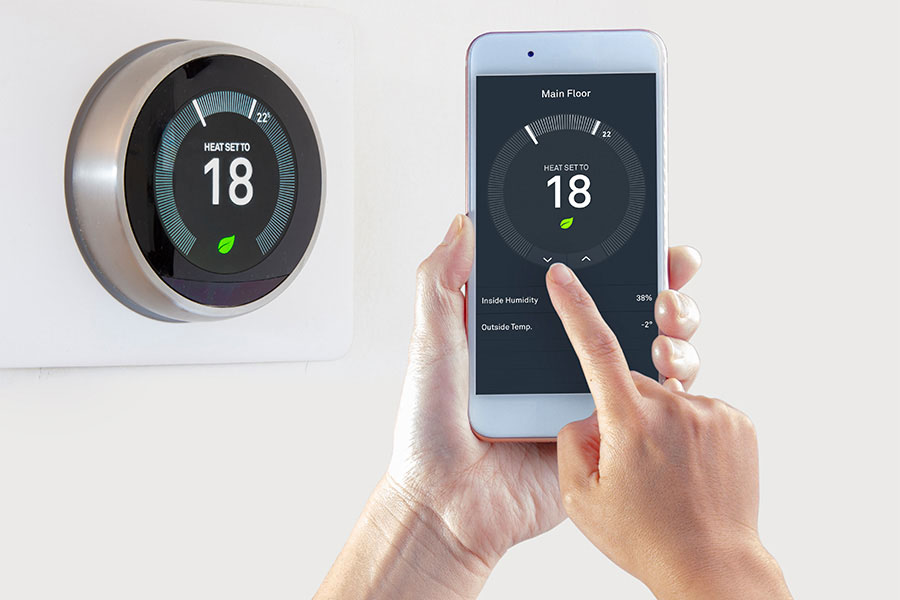
Smart Thermostats Connect to your home’s Wi-Fi network and can be controlled remotely via smartphone. Many models learn your preferences over time and automatically optimize settings for energy savings. Smart thermostats are particularly well-suited to Sullivan, CO’s unpredictable climate — you can adjust your settings remotely when the weather changes unexpectedly.
Zoned Thermostats Work with multi-zone HVAC systems to control temperatures independently in different areas of the home. Ideal for larger homes or those with rooms that are harder to heat or cool consistently.
Why Sullivan, CO Homeowners Need To Understand Their Thermostat
Colorado’s weather is notoriously unpredictable — one day it’s snowing, and the next it’s 70 degrees and sunny. That means the thermostat in your Sullivan home needs to be calibrated correctly and positioned well to keep up with the frequent changes.
Understanding how a thermostat works can help you make smarter decisions:
- Upgrade to a programmable or smart thermostat for better efficiency — especially in a climate that demands frequent adjustment
- Recognize signs of a faulty thermostat early, such as short cycling, temperature swings, or the system failing to turn on
- Save energy by adjusting setpoints when you’re away or asleep — a programmable thermostat automates this without the hassle
- Ensure proper thermostat placement, away from drafts, direct sunlight, heat-generating appliances, and air vents — inaccurate sensor readings cause the system to work harder than it needs to
A malfunctioning thermostat can be the hidden source of many common heating and cooling problems — including the system failing to turn on at all. Sometimes the fix is as simple as replacing batteries or recalibrating the setpoint. Other times, problems with electrical circuits or relays require professional diagnosis. If you suspect a thermostat issue, contact Parker Heating and Air for a professional assessment in Sullivan, CO.
Get Help With Your Thermostat From Sullivan’s Trusted HVAC Professionals
Ideally, you can keep your home comfortable by letting the thermostat do the heavy lifting. If you’re still wondering, “How does a thermostat work?” or need help understanding automatic programmable thermostats, Parker Heating and Air is here to help.
Understanding your thermostat isn’t just a tech curiosity; it’s a practical way to stay in control of your comfort and energy costs. And when you live in an area where the weather keeps you guessing, that knowledge can go a long way. Let Parker Heating and Air help you choose the perfect thermostat or upgrade your current one with a smart, programmable model, and keep your HVAC system in your Sullivan, CO home working smarter, not harder.